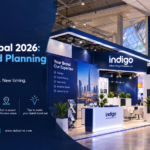

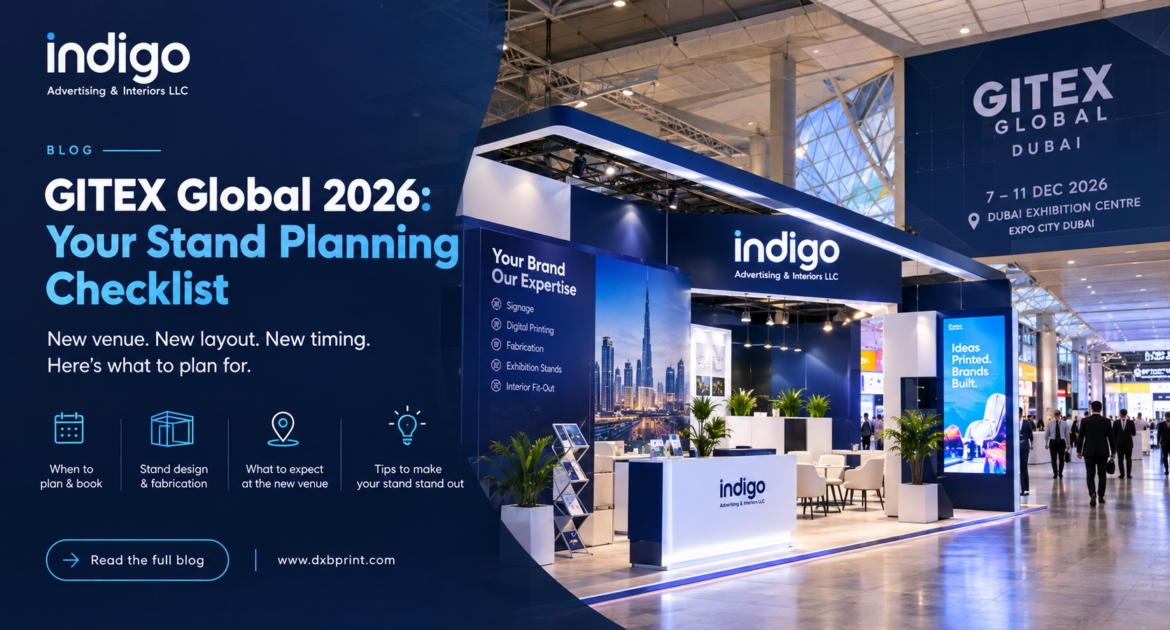
GITEX Global 2026 runs December 7–11 at the Dubai Exhibition Center in Expo City Dubai — its first year away from the long-time Dubai World Trade Center home. For exhibitors, that venue change matters: booth allocations, hall layouts, and production lead times all reset with it, which means stand design and branding planning needs to start earlier than in past years, not later.
If your business is exhibiting — or still deciding whether to — here’s a practical rundown of what to plan for and when, from a company that fabricates and installs exhibition stands across the UAE.
Why the Venue Change Affects Your Stand Planning
Dubai Exhibition Center is a newer, larger facility than DWTC, built for Expo 2020’s legacy halls. A few practical implications for exhibitors:
- Hall dimensions and ceiling heights differ from DWTC, which can affect whether a design that worked at a previous GITEX will fit cleanly this time. Always confirm the dimensions of your allocated space before finalizing artwork.
- Longer travel distances between halls at the Expo City site mean foot traffic patterns will be different from previous years — a stand’s visibility from multiple approach angles matters more than it used to.
- First-year venue logistics (loading docks, window installation, and storage) are still being finalized by organizers, so booking your fabrication and installation partner early helps you avoid being squeezed into a tight last-minute installation slot.
Build Your Stand Timeline Backward From December 7
A rough planning window that works for most exhibitors:
8–10 weeks out (early October): Confirm your booth size and location, finalize your branding concept, and lock in your design and fabrication partner. This is also when to decide between a modular/reusable stand and a custom build — modular stands have shorter lead times and can be reused at future events.
5–6 weeks out (late October): Artwork and structural design sign-off. Any acrylic fabrication, 3D lettering, or backlit elements need to go into production now — these have longer turnaround than flat printing.
2–3 weeks out (mid-November): Large-format graphics, banners, and roll-ups go to print. Double-check backdrop and media-wall sizing against your actual booth dimensions rather than reusing sizes from a previous event — a size that fit at DWTC may not suit your new footprint.
Final week: Installation, walkthrough, and touch-ups. Build in a buffer day, given this is the venue’s first GITEX cycle.
What Actually Gets Attention on the Show Floor
With 200,000+ attendees and thousands of exhibitors competing for eyes, a few things consistently make a stand stand out:
- Illuminated elements. LED-backlit signage and 3D channel letters are clearly visible from a distance and hold attention after dark in the hall.
- A clear focal point. One dominant brand message, visible from the aisle, beats a wall of smaller graphics competing for attention.
- Materials suited to a busy hall. Acrylic and metal fabrication hold up to five days of heavy foot traffic and repeated handling better than lightweight alternatives.
- Consistent branding across every touchpoint — backdrop, counter, banners, and even staff uniforms — so the stand reads as one cohesive brand experience rather than assembled parts.
Common Mistakes to Avoid
- Reusing old artwork sizes without checking the new hall dimensions. Backdrop and media wall proportions especially need rechecking for this venue.
- Leaving fabrication to the final two weeks. Acrylic and metal work, in particular, need more lead time than flat printing.
- Underestimating lighting. A stand that looks great under office lighting can read flat under a hall’s ambient lighting without built-in backlighting or spotlighting.
Contact Us Today For Branding.